Creating your own perfume is one of those experiences people talk about a lot without quite knowing what it involves. Do you need a “good nose”? Do you really blend essences, or pick from a catalogue? What do you actually take home?
Here is exactly how a perfume making workshop unfolds at our studio on Rue de Flandre in Brussels, what to plan for, what it costs and a few tips to leave with a fragrance you will genuinely wear.
Do you need any prior knowledge?
None at all. The workshop is designed for complete beginners: the only useful skill is being able to say “I like it” or “I don’t” while smelling a blotter strip. The perfumer guiding you explains the vocabulary as you go and corrects dosages when needed. Children from age 10, teenagers and adults who “can’t smell anything” all leave with a bottle they are proud of.
Step 1: understanding the fragrance pyramid (15 min)
A perfume is built in three layers. Top notes (citrus, fresh herbs) are what you smell first and fade within minutes. Heart notes (flowers, spices, fruit) give the perfume its personality for two to three hours. Base notes (woods, vanilla, musk, amber) last on the skin all day and anchor the whole.
This introduction is short but changes everything: it stops you from composing a perfume made only of top notes, delightful for ten minutes and then completely gone.
Step 2: smelling and selecting essences (30 min)
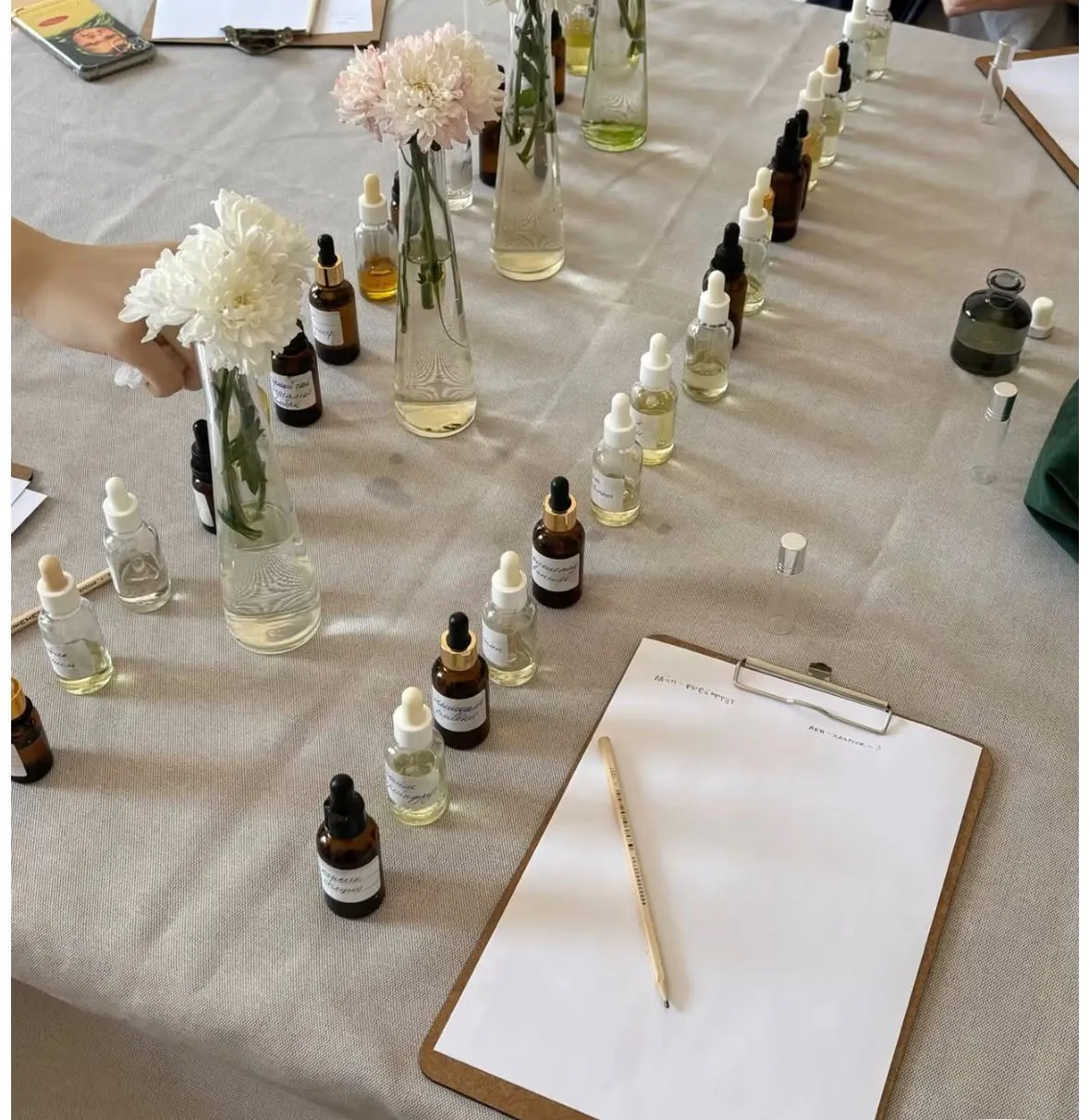
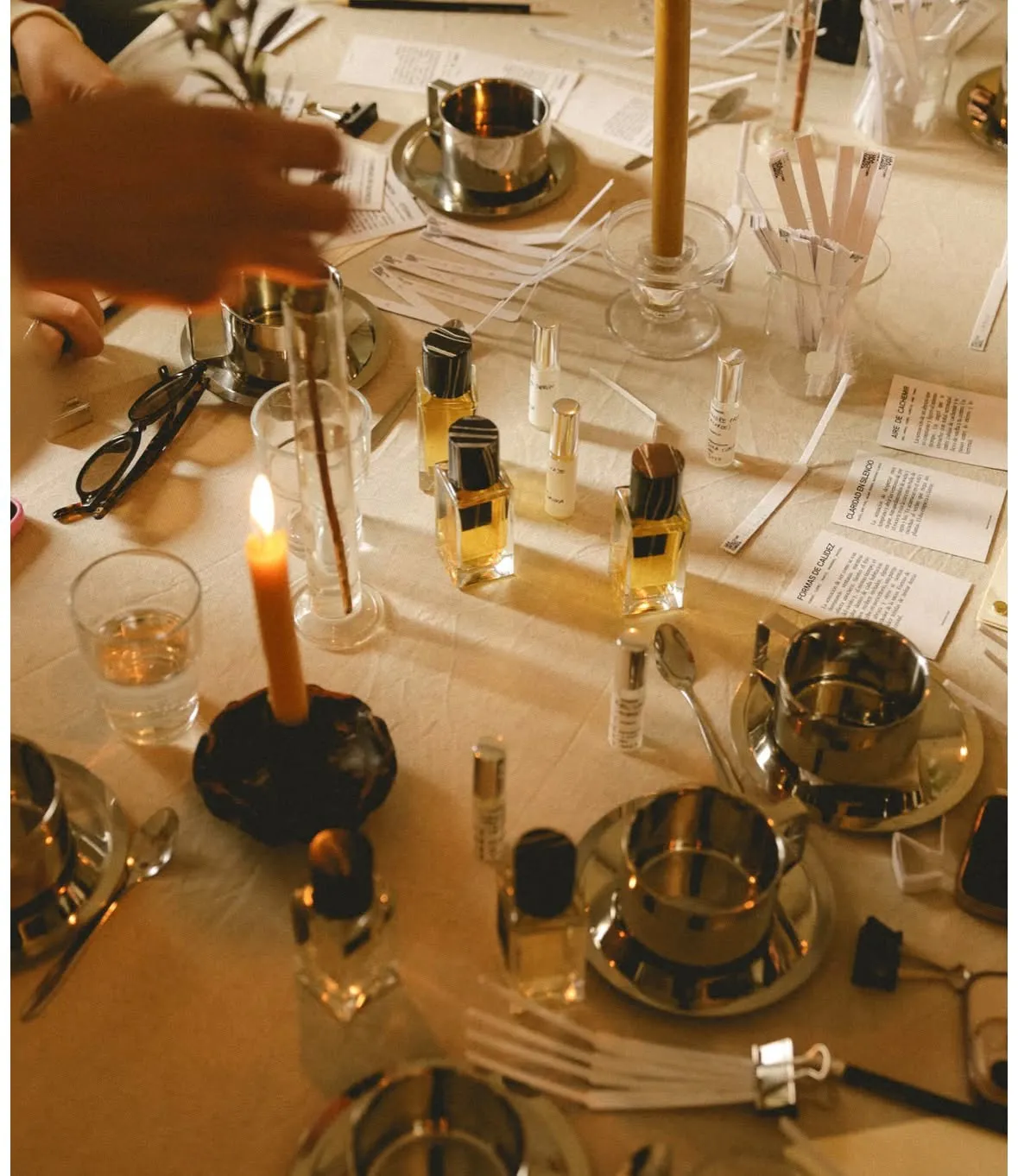
In front of you is a palette of around thirty essences, each labelled by family and layer. You smell them one by one on blotters, note the ones you like, then keep three to five per layer. It is the longest and most fun part of the workshop, and the moment groups come alive: people compare, share their finds and discover that the colleague from the next desk loves patchouli.
Step 3: dosing and composing (45 min)
Using graduated pipettes, you measure each essence into a test tube following a simple rule: roughly 20% top, 50% heart and 30% base. You smell, adjust and start again. A perfume that is “too sweet” is fixed with a woody note, one that feels “flat” wakes up with a citrus. The facilitator moves between tables suggesting corrections, but the final decision is yours.
Step 4: bottling and formula card (15 min)
Once you are happy, your concentrate is diluted in perfumer’s alcohol and poured into a 30 ml spray bottle that you name and label. You also leave with your formula card: the exact essences and quantities, so you can reorder your perfume later without redoing the workshop.
How much does a perfume workshop cost in Brussels?
Our perfume making workshop costs €70 per person, including raw materials, bottle and formula card. The price is the same for an individual coming alone and for a group, with a tailored quote from 10 people for companies. It lasts 2 hours.
Our tips for a successful perfume
- Come without perfume on your skin: it would distort your perception for the whole session.
- Do not smell more than ten essences in a row: take a break, smell your forearm or some coffee to “reset your nose”.
- Choose at least one base note you truly love: it is the one that will remain in the evening.
- Compose for yourself, not to impress. Simple perfumes of five to seven essences are often the most successful.
- Let your bottle rest for two to three weeks away from light: the perfume harmonises and gains roundness.
Which occasion is it for?
The perfume workshop is our most requested format for team building because it is calm, inclusive and leaves a tangible memento on every desk. It also works beautifully for a hen party, as a birthday gift or simply as a Saturday afternoon out with friends.
Want to try? The perfume making workshop can be booked online or via WhatsApp, at our studio on Rue de Flandre or at your venue anywhere in Belgium. For a group or a company, request a quote: reply within 24 hours.