Choosing a perfume often means three minutes at a counter, one spray on a blotter, a scent you like in the moment… and a bottle that ends up at the back of a drawer. A perfume evolves over hours and reacts to skin and season: choosing one takes a little method.
This guide covers the essentials without jargon: the three notes, the main fragrance families, concentrations, the right way to test and a few tricks to make a perfume last. Enough to buy, or compose, a fragrance you will actually wear.
The 3 notes of a perfume: top, heart, base
A perfume is built like a pyramid. Top notes are the first you perceive: light and volatile (citrus, aromatic herbs), they evaporate within ten to twenty minutes. Heart notes follow and give the perfume its character for two to four hours: flowers, spices, fruit. Base notes stay longest on the skin, sometimes all day: woods, resins, musks, vanilla.
That is why a perfume that wins you over on the first spray can disappoint an hour later, or the opposite. Judging a perfume means judging its evolution, not its opening.
The main fragrance families
- Citrus (hesperidic): bergamot, lemon, grapefruit; fresh and light, typical of eaux de Cologne.
- Floral: rose, jasmine, orange blossom, iris; the widest family, from very fresh to very opulent.
- Fougère: lavender, oakmoss, coumarin; the classic accord of so-called “masculine” scents.
- Chypre: bergamot, oakmoss, patchouli, labdanum; elegant, with depth.
- Woody: cedar, sandalwood, vetiver; dry or creamy, often understated and long-lasting.
- Oriental / amber: vanilla, amber, benzoin, spices; warm and enveloping, better suited to evenings and winter.
Eau de Cologne, eau de toilette, eau de parfum: concentrations
The difference lies in the proportion of perfume concentrate in the alcohol. In ascending order, and as a rough guide: eau de Cologne (around 2 to 5%) lasts one to two hours; eau de toilette (5 to 10%) three to five hours; eau de parfum (10 to 20%) five to eight hours; extrait or parfum (20% and above) a full day. These figures vary from house to house, but the idea holds: the higher the concentration, the fewer sprays you need, and the closer to the skin the perfume stays.
Testing a perfume without getting it wrong
- Test on skin, not only on the blotter: warmth and pH change the scent.
- Wait at least thirty minutes before judging, ideally several hours, to smell the heart and base.
- Three perfumes maximum per visit, on different spots (wrists, inner elbow): beyond that your nose saturates.
- Do not rub your wrists together, it “breaks” the top notes.
- Smell your own skin or sleeve between trials to reset your nose; coffee beans do not really help.
- Come back another day before buying: a perfume is chosen over two visits, not one.
Perfume and season, perfume and occasion
Heat amplifies a perfume, cold muffles it. In summer, citrus, light florals and fresh woods breathe better; in winter, ambers, spices and warm woods come into their own. Likewise, a discreet perfume suits the office or an interview, a more present one suits an evening out. Many people end up with two or three perfumes to cover these situations rather than a single “signature scent”.
Making your perfume last
- Apply to moisturised skin: a neutral cream or unscented oil holds the molecules better.
- Aim for warm spots: neck, wrists, behind the ears, inner elbow.
- Spray clothes and hair with care: perfume lasts long there, but alcohol can stain or dry out.
- Keep the bottle away from light and heat; the bathroom is the worst place.
- Do not store it for too long: an opened perfume changes within two to three years, especially the top notes.
Creating your own perfume
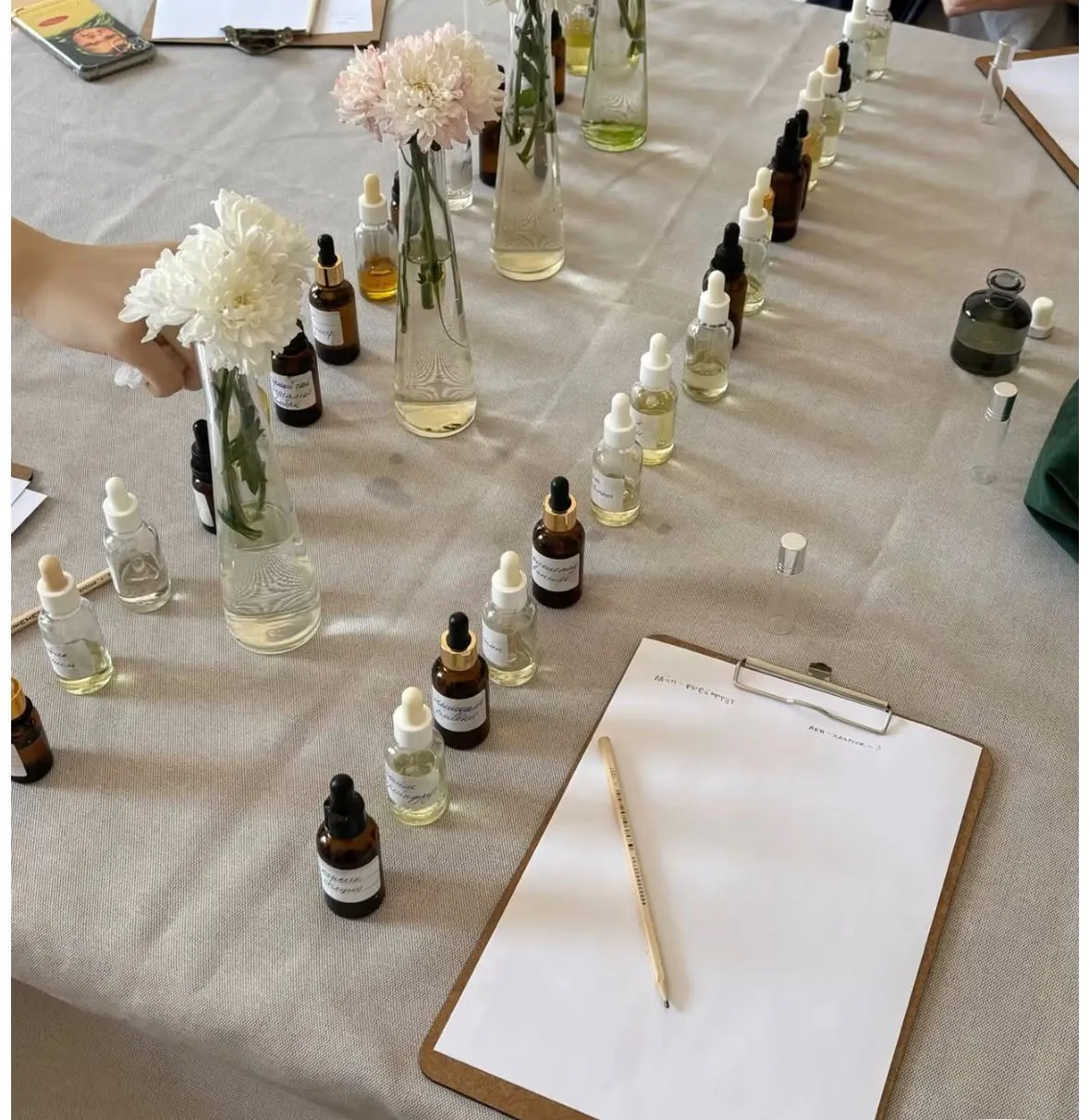
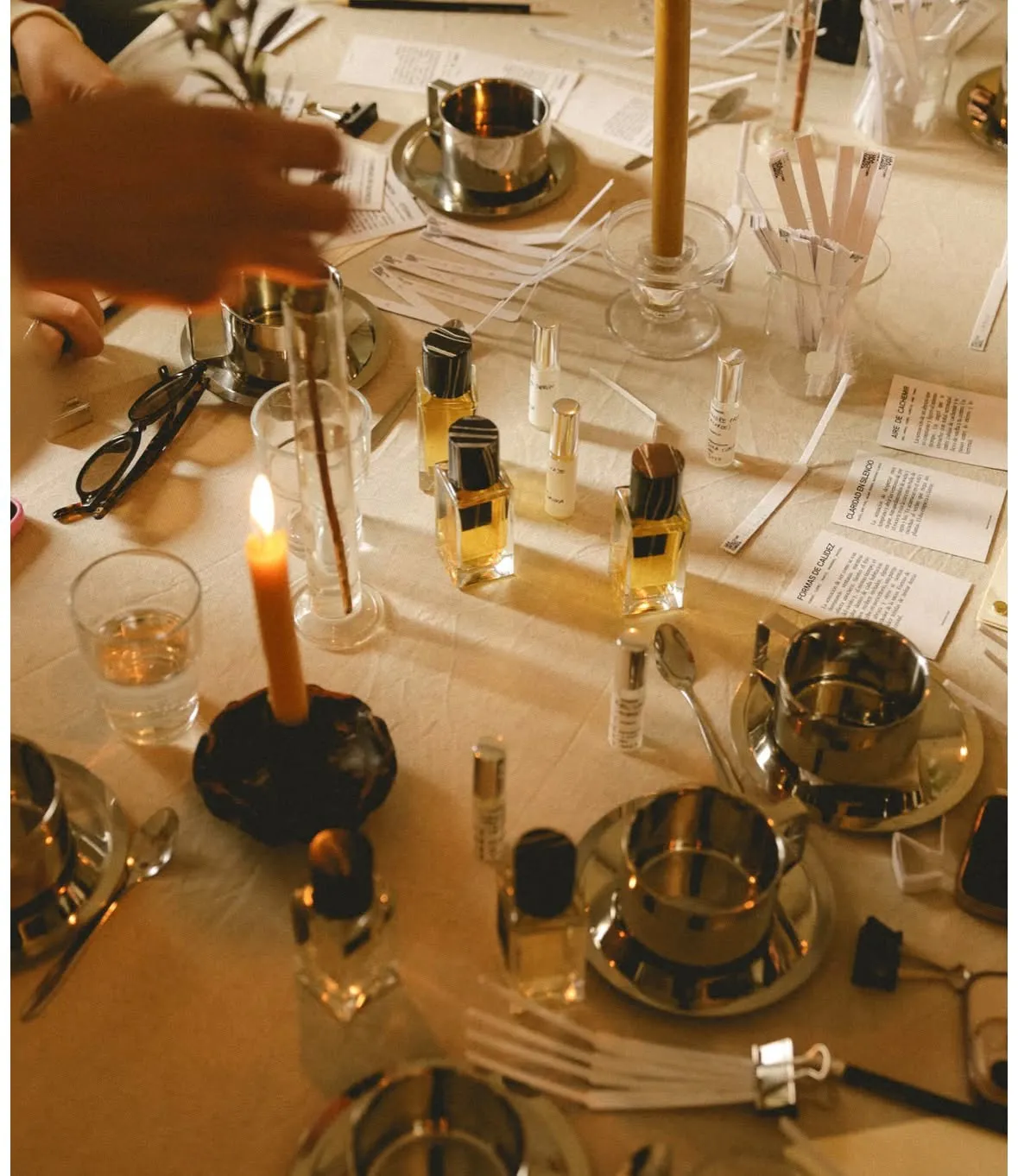
The best way to understand all of this is to compose one yourself. In a perfume making workshop you discover a palette of essences by family, choose your top, heart and base notes, test proportions and adjust until you obtain a fragrance unlike any other. At Break-it, the perfume making workshop lasts about two hours, at Rue de Flandre 73 in Brussels, and everyone leaves with a 30 ml bottle for €70 per person.
To know exactly how a session unfolds, read our guide making your own perfume in Brussels, step by step.
In short: test on skin, give the perfume time to evolve, match the family to the season and keep the bottle out of the light. And if no perfume in the shops quite feels like you, compose your own in a workshop, alone, as a pair or for a hen party. Contact us to book.